|
The Drawbridge
by James Gerrard
Freedom, Security and Wealth
|
|||||||||||||||||||||||||||||||||||||
|
Hi Reader
About The Drawbridge
James Gerrard studied at the London School of Economics and Political Science (LSE), was “highly commended” by Cambridge University and was one of the UK’s youngest Property Week Award winners, building over $115m GDV by 28 and prior to this $70m GDV in prime central London housing. James now advises some of the most sophisticated family offices globally on wealth preservation strategies with wealth creation results through his investment management firm The Drawbridge. His firm reads macroeconomic and political tides, positioning investors to ride these tides and not be crushed by them. James lost his home as a teenager as his father could no longer keep up with mortgage payments after the internet wiped out not just his father’s job but his entire industry. James believes there is not a wealth gap but a knowledge gap and by democratising knowledge that gap can be closed, an opportunity his father didn’t have. The below dashboard is a summary of information that his investment partners receive, shared with you for free. |
|||||||||||||||||||||||||||||||||||||
|
The Drawbridge | October 2026
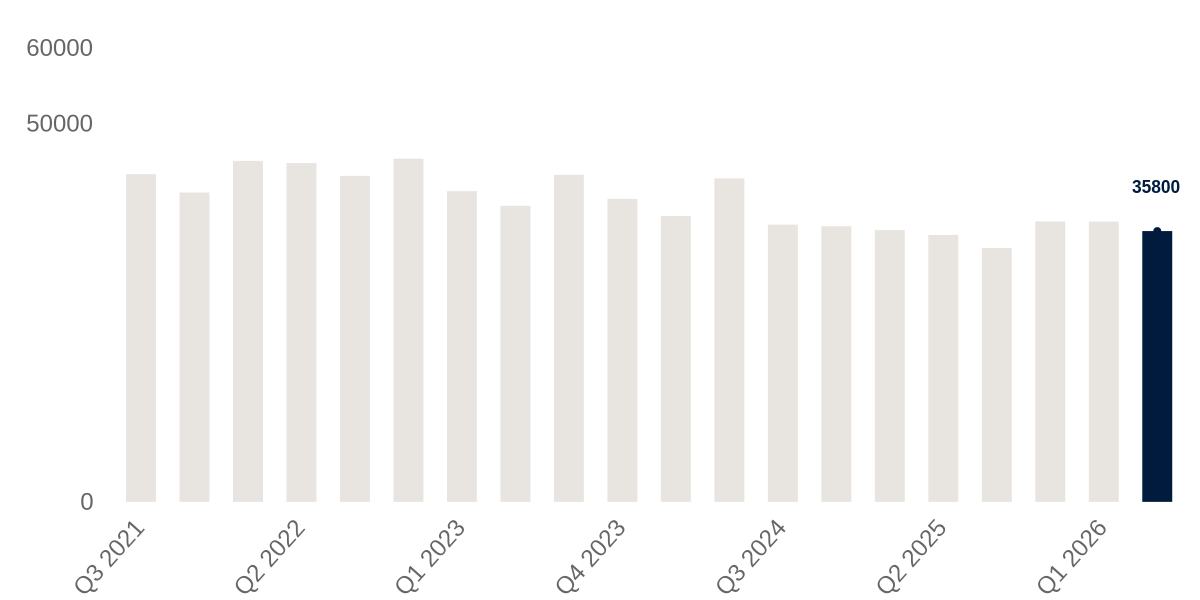
Important TrendsFrom James: October brings a less comfortable mix: rent inflation is increasing while house-price growth is slowing. Mortgage approvals have fallen again, and the latest quarter of new-build completions is weaker than the previous one. Disclaimer
This content is provided for general information and educational purposes only. It does not constitute financial, investment or legal advice. You should seek independent professional advice before making any financial decisions.
Listen to this issue
Prefer to listen? Play James’s October briefing here and keep reading on this page.
Data checked 01 October 2026; sources: ONS, UKHPI, HMRC, Bank of England, World Bank, Freightos, GOV.UK, and The Drawbridge Investment Management.
|
|||||||||||||||||||||||||||||||||||||
Demand Metrics
3 Takeaways / 30 Seconds
This month: England house-price growth has slowed, rent inflation has increased, and mortgage approvals have fallen. The latest quarter of building-control-reported completions is also lower than the previous quarter.
Implication: Rent growth supports income, but purchase price, operating costs and refinancing still determine whether that income is sufficient. A stronger rental market does not automatically make every property a sound investment.
Watch next: Watch inflation and mortgage pricing alongside employment, approvals and viable housing delivery. The next step in a recovery needs evidence that buyers can finance purchases, not just higher nominal rents.
Explanation of Data
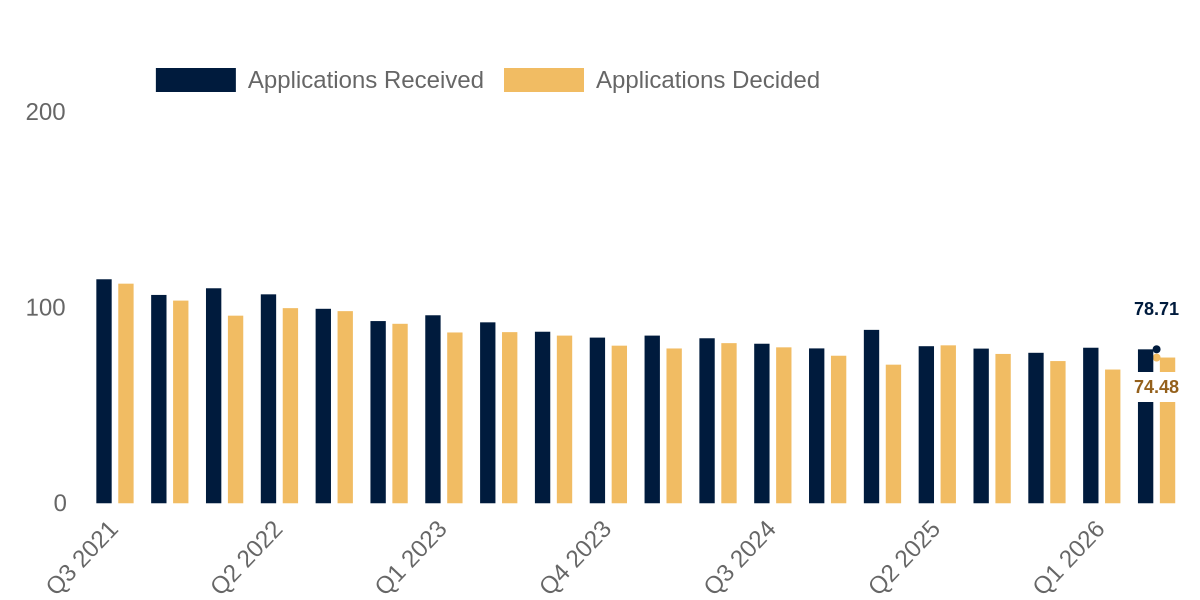
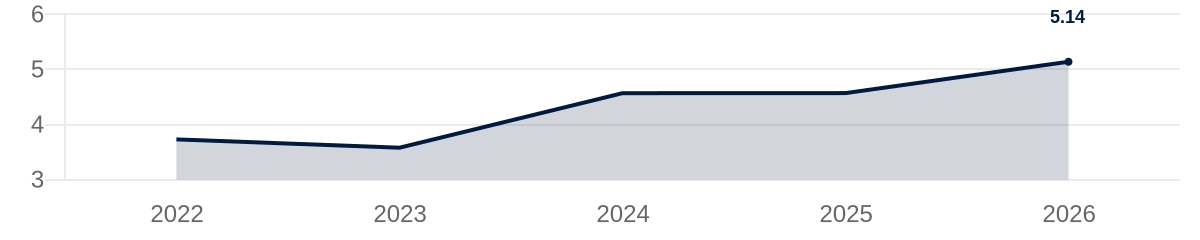
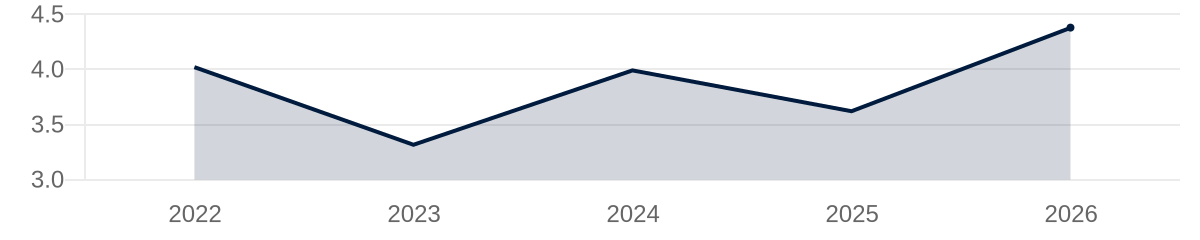
England house-price and rent monthly changes are not seasonally adjusted. Recent house-price estimates are provisional and may be revised. Rent (England) - £1,459 Price-to-Income - 8.01 (England house price / one employee's annualised GB gross regular pay) Mortgage Payment to Income - 40.4% (Modelled mortgage payment / gross pay) Average Salaries - £36,660 UK Unemployment - 4.9% (May–July 2026) England Home Sales - 81,710 (August 2026, provisional) Deep Insight
Deep Insight 1: Slower house-price growth and faster rent growth put the focus back on income. England rent inflation has increased, while annual house-price growth has weakened. That can improve a property's gross yield when rents rise faster than its price, but repairs, vacancies, tax and finance costs still determine the net result. July's average England house price was £293,479, up 1.1% over the year. After CPI adjustment it was down 1.6% over the year and 8.8% over five years. Whilst people may feel that the value of their property is increasing, after inflation its value has fallen over those periods. For owners with mortgages, nominal house-price growth can have a disproportionate positive impact on their equity relative to the amount invested, even while the property's real value is being eroded. Borrowing also magnifies equity losses when prices fall. Deep Insight 2: Price affordability and financing affordability remain different questions. Our price-to-pay and mortgage-payment-to-pay measures use one employee's annualised gross regular pay, not household disposable income. The mortgage model uses a 75% loan-to-value repayment loan over 25 years and the five-year quoted rate for the same month as prices and pay. In essence, housing is cheaper to purchase relative to wages than five years ago, but the dramatically increased cost of the mortgage outweighs this benefit. Deep Insight 3: Mortgage approvals continue to fall, and housing transactions have also fallen. My reading is that weaker approvals point to a softer sales pipeline over the next quarter, which could place downward pressure on nominal and real house values. Approvals are a leading indicator, not a guarantee of completed sales. The risk I am watching is the combination of persistent inflation and weaker employment. If incomes come under pressure while mortgage costs remain high, property at the low to medium end of the market can become unaffordable. |
|||||||||||||||||||||||||||||||||||||
Signals to WatchBroad money, copper, wage expectations and consumer prices help explain the pressures around the housing market. They cover different populations and time periods. Read them together with employment and borrowing costs, rather than treating any single line as a house-price forecast.
Forward Wage GrowthActual regular pay and employer expectations
Annual growth (%)
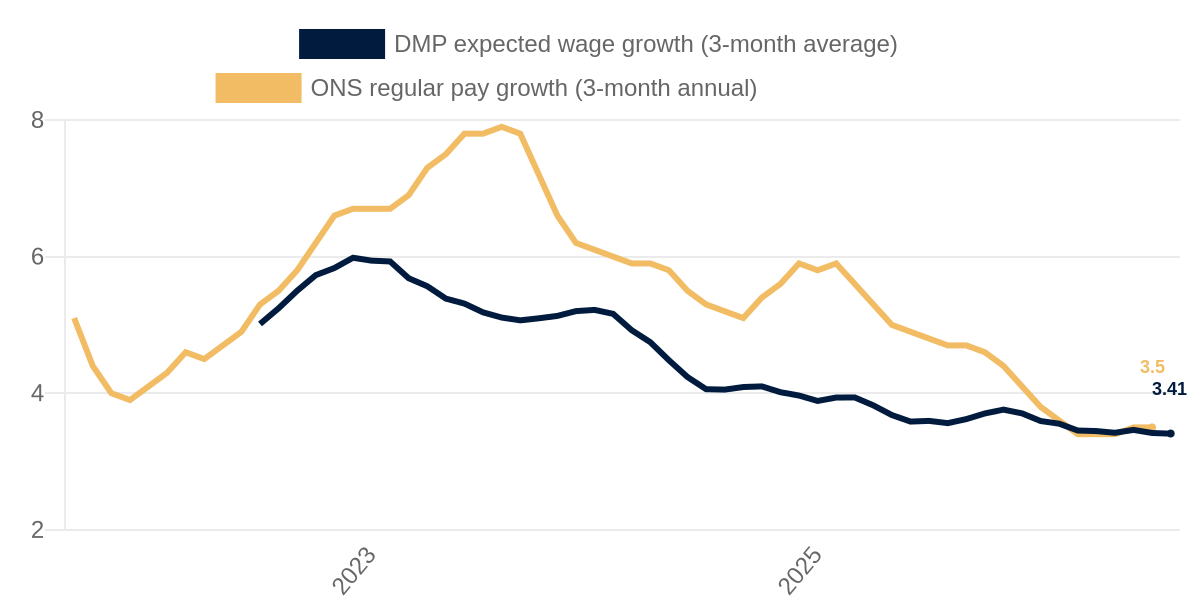
Latest observation: August 2026. DMP history begins July 2022.
ONS regular-pay growth is 3.5% in the three months to July 2026; the BoE DMP expectation is 3.4% in the three months to August 2026. Bank of England Agents: Average 2026 pay settlements are 3.6%. Inflation PulseChange in the price level, not a change in the inflation rate
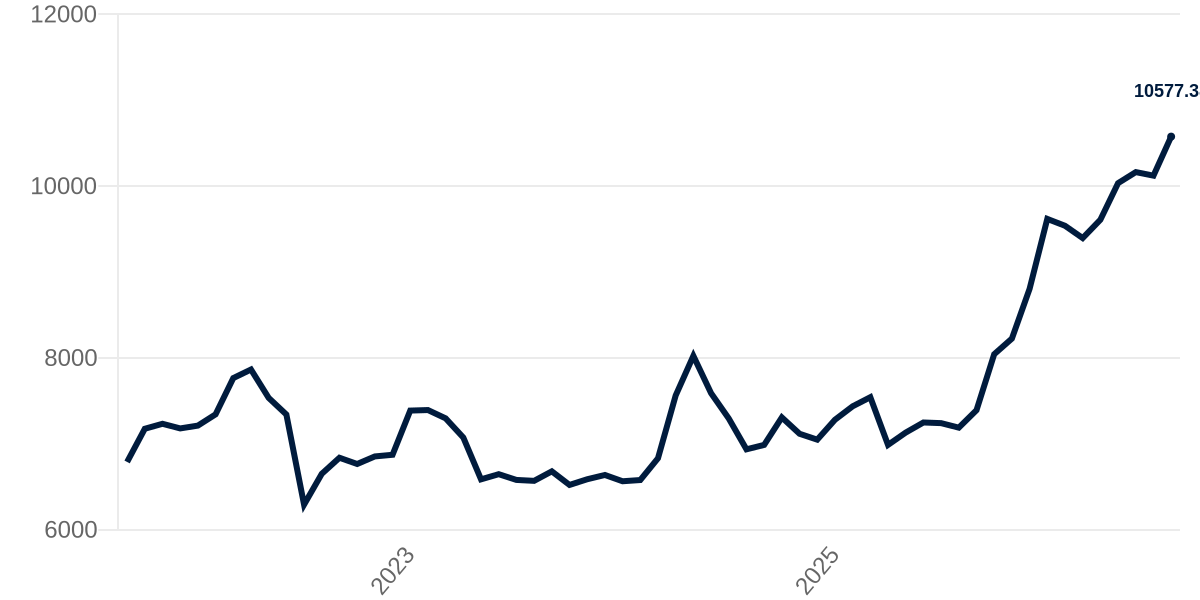
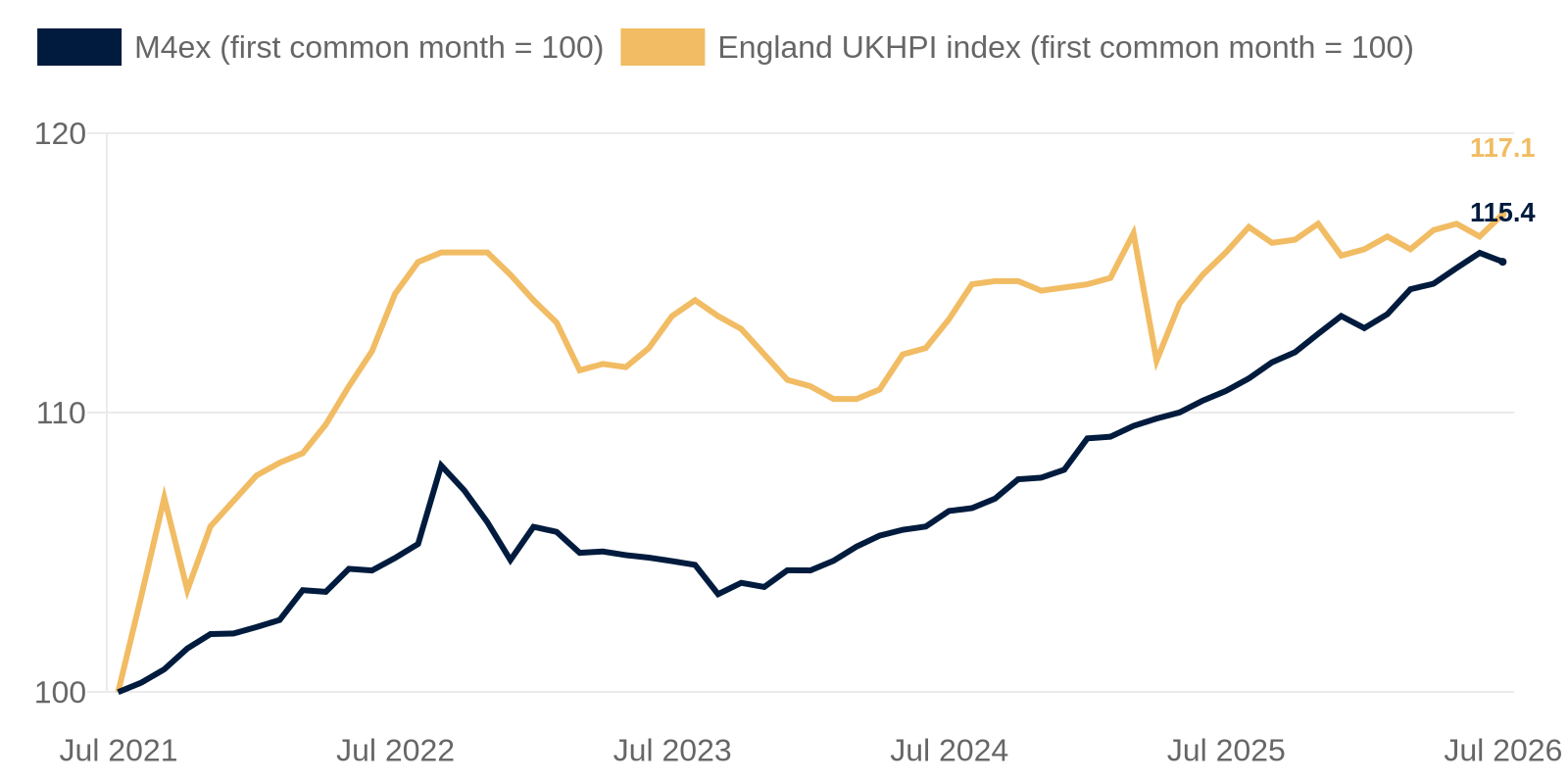
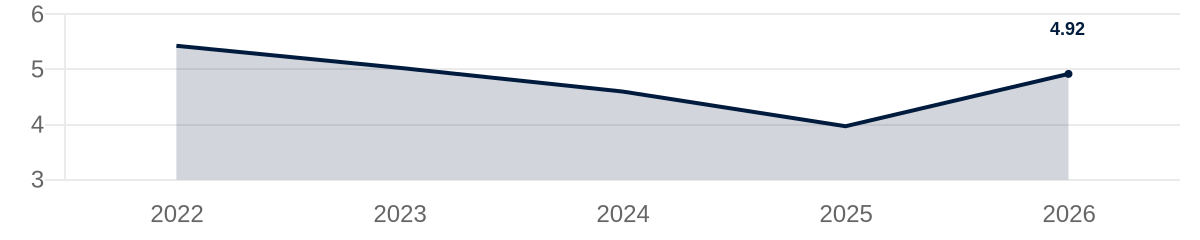
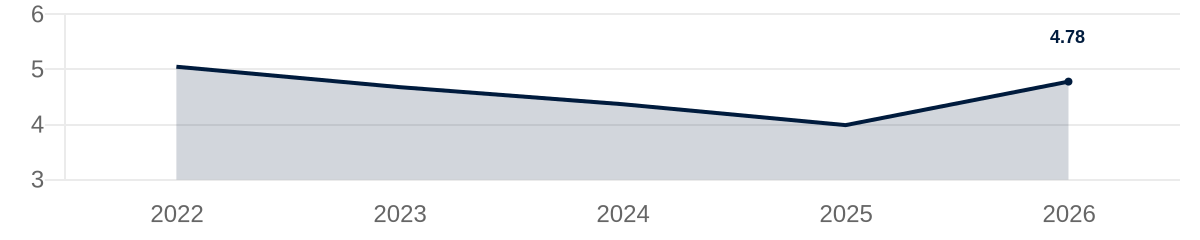
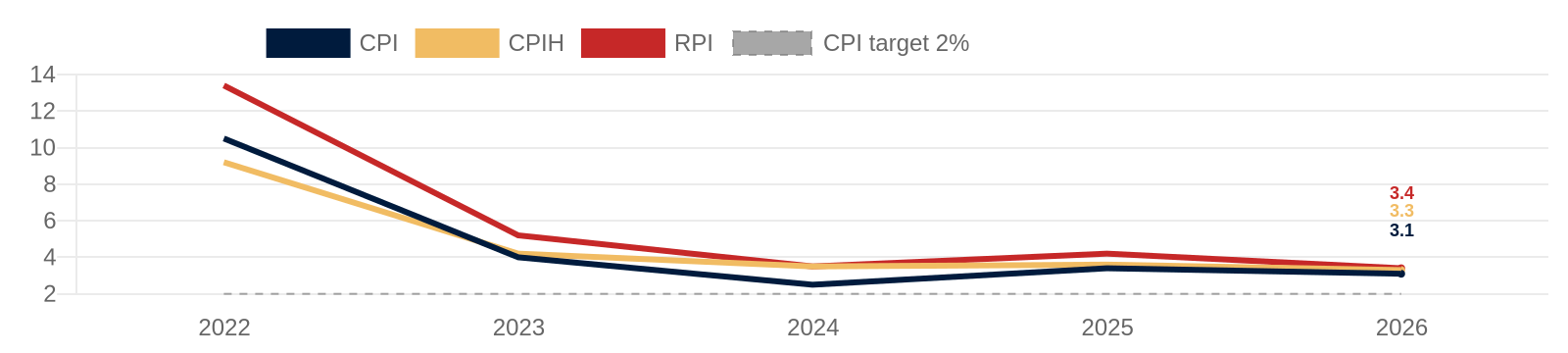
World Bank Copper USD/metric tonne divided by BoE XUMAUSS USD per GBP, matched by month. UK M4ex is seasonally adjusted; England house prices are not. Both series use the same five-year period and starting value of 100. This comparison describes long-term growth and does not establish housing's fair value. ONS KAI9 regular-pay growth and BoE DMP expected wage growth (three-month averages). One-month and five-year price-level changes calculated from the ONS index; the official 12-month rate uses ONS D7G7 to avoid rounded-index error. One-month and five-year price-level changes calculated from the ONS index; the official 12-month rate uses ONS D7G8 to avoid rounded-index error. Conclusion — Signals to WatchOctober's signals call for patience. Income growth can support rents and borrowing capacity, but August CPI inflation increased to 3.1%, from 2.9% in July. Persistent inflation makes a rapid fall in funding costs less certain. The Bank of England Agents' September report puts average 2026 pay settlements at 3.6%, revised from 3.5%. The change reflects additional information about earlier settlements, particularly April; it is not evidence that September wage deals suddenly accelerated. My view remains that a durable improvement needs rents and incomes to be supported by employment, and borrowing costs reducing enough for the numbers to work. The comparison of money supply and house prices adds context, while copper helps us monitor cost pressure. My reading is that persistent inflation has become embedded in the economy and the cost of capital has risen in turn. So whilst money supply is increasing, expensive capital is restraining house-price growth. Nominal prices are still rising modestly, but that growth remains weak and has not kept pace with consumer prices over the year. Help a friend close ‘the knowledge gap’. Click to share |
|||||||||||||||||||||||||||||||||||||
Supply Metrics
|
|||||||||||||||||||||||||||||||||||||
Inflation & Debt
|
|||||||||||||||||||||||||||||||||||||
Geopolitical SpotlightThe midterms may matter far beyond American politics. The US enters the final weeks before November’s elections after the 10-year Treasury yield touched 5.34% on 1 October, its highest since 2002. Markets are already confronting persistent inflation, expensive energy and expansionary fiscal policy. President Trump has floated a $5,000 payment to adult American citizens if Republicans retain both chambers of Congress. This remains a proposal requiring congressional approval. Whatever the outcome, my focus is the bond market: if investors see greater borrowing and spending ahead, they may demand higher returns for owning US debt. Treasuries ultimately influence the global price of money. At the same time, we are witnessing a new scramble for resources. The nineteenth-century Scramble for Africa was about territory and resources; today’s competition is about securing energy, critical minerals, processing capacity and supply routes. China is raising domestic oil output while pursuing stronger reserves and more diversified imports. The US is seeking to rebuild domestic critical-mineral supply chains and has announced agreements to expand overseas resource access, including in Venezuela. Different methods, same objective: prevent another power turning resources into a strategic vulnerability. Europe is also preparing for a less secure world. Germany now requires 18-year-old men to complete military-service questionnaires, while retaining the possibility of needs-based conscription through further legislation. France has launched voluntary national military service, while Poland is expanding voluntary defence and civilian-resilience training. These are different systems, but the direction is clear: European governments increasingly see defence as involving wider society, not just professional armed forces. The UK should watch this carefully. Britain and the EU have agreed to deepen defence cooperation, including military mobility. This does not mean Britain is joining a European system of national service, but deeper defence integration makes the boundary between military cooperation and broader national preparedness increasingly important. Recent wars have also demonstrated the power of asymmetric warfare. Ukraine has shown how inexpensive drones and other systems can impose enormous costs on a much larger military. The Iran conflict similarly demonstrated how missiles, drones and disruption of energy routes can impose costs far beyond the battlefield. Governments are responding with investment in AI, autonomy, drones and air defence to restore advantages that cheaper technologies have eroded. Our longstanding investment thesis remains broadly unchanged. Deglobalisation means duplicated supply chains, greater defence spending, competition for commodities and more expensive movement of goods. In our view, these forces favour a more inflationary world than the one we became accustomed to before 2020. Our working thesis is that this adjustment continues towards 2030–32. The architecture that produced decades of cheap goods, cheap energy and cheap money is being rebuilt around resilience and security rather than maximum efficiency. In that environment, low-yielding assets bought at high valuations remain vulnerable to a higher cost of capital, while we see a structural advantage in assets producing strong current income. Domestic Political SpotlightWe remain politically agnostic. That is an absolute necessity when trying to identify the prevailing zeitgeist that will ultimately shape policy, taxation and real-estate values. Our longstanding thesis is that the Conservative Party appears underpriced relative to the political cycle. We continue to watch that thesis, particularly where it intersects with property. Kemi Badenoch’s Conservatives remain committed to abolishing Stamp Duty Land Tax on primary residences — a policy which, if implemented by a future Conservative government, could materially change transaction economics and liquidity in the housing market. Reform remains an important part of the political landscape, but our working thesis is that the strains associated with building a relatively young party at speed will become increasingly visible under sustained scrutiny. That is a thesis, rather than a prediction of the electoral outcome. Andy Burnham — or “Andy Fantastic”, as we have termed him — has ruled out an early election and says the next general election will be in 2029. That means his government will have to navigate the macroeconomic environment rather than quickly seek a new mandate. He has explicitly defined his government around reducing the cost of living; so far, more than half of Britons tell Ipsos that Labour is doing a bad job on that measure, although Burnham himself currently retains comparatively strong personal ratings. For property investors, the more important question is the direction of taxation. Reports suggest the Treasury is considering lowering the threshold for the planned High Value Council Tax Surcharge in England from £2 million to £1.5 million, which would disproportionately affect London and the South East. That remains Budget speculation rather than settled policy, but it reinforces the political risk surrounding higher-value residential property. At the same time, Number 10 North and Burnham’s devolution programme represent a deliberate attempt to move decision-making and economic activity beyond Westminster and towards the regions. Our broader thesis therefore remains unchanged: wealth tied up in property is likely to remain an attractive tax base. With substantial household wealth stored in housing and a major intergenerational wealth transfer under way, investors should continue to consider the possibility of greater taxation of inherited wealth and higher-value property. That does not tell us precisely what the next Budget will contain, but it does reinforce our longstanding distinction between high-value, low-yielding property and assets whose income yield can absorb a higher-tax, higher-rate environment. |
|||||||||||||||||||||||||||||||||||||
|
Share Feedback
Tell us what we should improve on. Reply to this email with your suggestions.
|
|||||||||||||||||||||||||||||||||||||
|
Important Notice
The information contained in this newsletter is for general information and educational purposes only and should not be relied upon as financial, investment, tax or legal advice. Whilst every effort has been made to ensure accuracy, no representation or warranty, express or implied, is made as to its completeness or accuracy. All views expressed are those of the author at the time of writing and are subject to change. Market conditions, economic data and forecasts may evolve, and past performance or trends are not reliable indicators of future outcomes. Before making any investment or financial decision, you should seek advice from a qualified and regulated professional adviser who can take into account your individual circumstances. © The Drawbridge Media Ltd. All rights reserved. This newsletter is published by The Drawbridge Media Ltd, the special purpose vehicle (SPV) publishing entity for The Drawbridge. |
|||||||||||||||||||||||||||||||||||||